Cross Stitch Bunny Laser Cut CNC: A Practical Evaluation
In the realm of digital fabrication and educational toy design, the Cross Stitch Bunny Laser Cut CNC represents a specific intersection of traditional craft aesthetics and modern manufacturing precision. This digital asset is not merely a decorative pattern; it is a functional blueprint designed for laser cutting machines to produce Montessori-style lacing games. For professionals in small-scale manufacturing, educators seeking hands-on learning tools, or hobbyists exploring CNC workflows, understanding the technical nuances of this file set is essential before committing machine time.
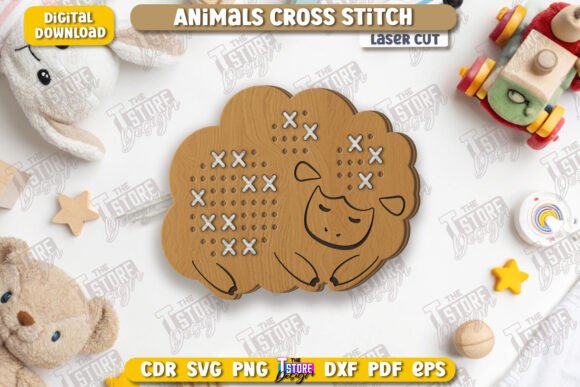
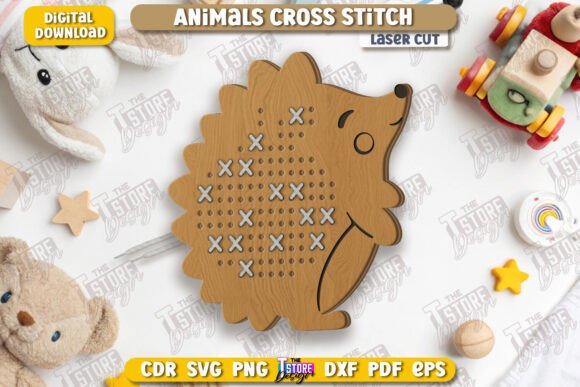
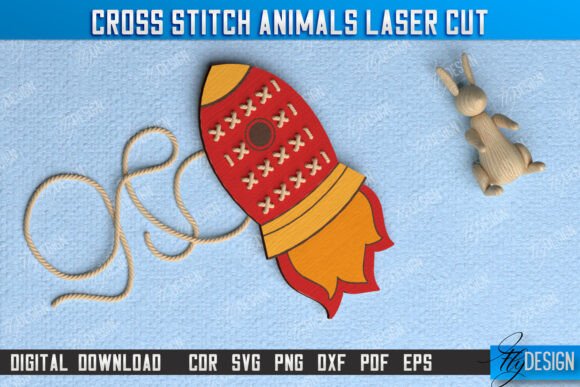
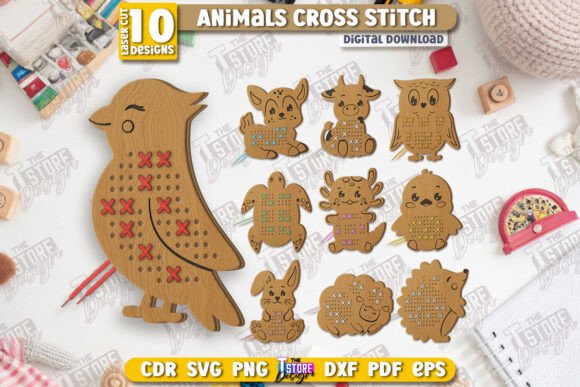
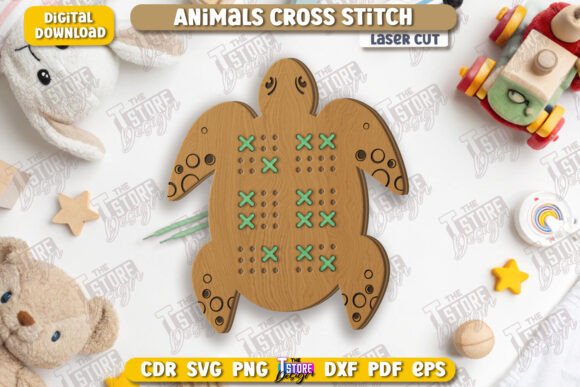
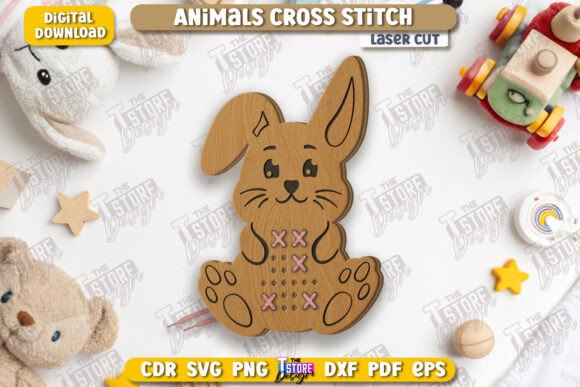
The primary value proposition of the Cross Stitch Animals Laser Cut Montessori Lacing Developing Game Educational Toy CNC File lies in its dual-layered design logic. Unlike standard cut files that rely on a single vector path, this resource utilizes a distinct color-coding system to manage two separate machine operations within a single workflow. The design specifies that the RED line indicates CUT paths, while the BLACK line indicates ENGRAVE paths. This separation allows the laser cutter to first score or engrave the cross-stitch texture onto the material surface and then precisely cut out the bunny shape, resulting in a finished product with tactile detail and clean edges.
Technical Specifications and File Compatibility
When evaluating digital assets for production, file format versatility is a critical metric. This package provides a comprehensive suite of formats, ensuring compatibility across various software ecosystems commonly used in professional and semi-professional settings. The zip archive includes:
- SVG (Scalable Vector Graphics): Ideal for web-based design tools and certain CAD programs.
- EPS (Encapsulated PostScript): A robust choice for high-end vector editing software like Adobe Illustrator.
- PNG (Portable Network Graphics): Useful for visual previews and documentation.
- PDF (Portable Document Format): Often preferred for print-ready layouts and some laser controller interfaces.
- DXF (Drawing Exchange Format): The industry standard for CAD-to-CAM workflows.
This variety addresses a common pain point in the laser cutting community: software incompatibility. However, users must remain vigilant regarding their specific machine control software. A notable observation from practical usage involves Lightburn, a popular control interface for laser engravers. There is a documented tendency for Lightburn to occasionally distort dimensions when importing SVG files, particularly if scaling parameters are not manually verified. To mitigate this risk and ensure dimensional accuracy—crucial for lacing holes that must align perfectly with wooden pegs—it is highly recommended to utilize the DXF file format instead. DXF files generally maintain geometric integrity more reliably during the import process, reducing the likelihood of misaligned cuts or distorted engravings.
Design Utility and Educational Application
The Cross Stitch Bunny design is specifically engineered for the creation of Montessori lacing toys. These educational tools are designed to develop fine motor skills, hand-eye coordination, and cognitive sequencing in young children. The "cross stitch" aesthetic adds a layer of visual interest that mimics traditional textile crafts, bridging the gap between old-world charm and new-world manufacturing.
From a usability standpoint, the effectiveness of the final product depends heavily on the quality of the source file and the operator's ability to interpret the color-coded instructions. The black engrave lines create the grid-like texture that defines the "stitch" look. If the laser power or speed is not calibrated correctly for the chosen material (typically plywood, basswood, or acrylic), the engraving may be too faint to be visible or too deep, compromising the structural integrity of the piece. Conversely, the red cut lines must be precise enough to release the shape without leaving excessive char marks, which could pose a safety hazard for children handling the toy.
For educators and parents, the long-term value of these toys is significant. They are durable, reusable, and free from electronic components or small plastic parts that can break easily. The Cross Stitch Bunny Laser Cut CNC file enables the creation of these items at a fraction of the cost of commercially manufactured equivalents, provided the user has access to a laser cutter and suitable raw materials.
Workflow Integration and Professional Considerations
Integrating this file into a professional workflow requires a methodical approach. Before initiating a batch production run, it is imperative to perform a test cut on scrap material. This step validates the kerf width, engrave depth, and overall dimensionality. Because the file relies on color separation for operation differentiation, the operator must configure their laser software to recognize Red as the cutting layer and Black as the engraving layer. Failure to do so will result in a machine attempting to cut along the engrave lines or engrave along the cut lines, leading to wasted material and potential machine errors.
Flexibility is another strength of this digital product. Since the files are vector-based, they can be scaled up or down to fit different sheet sizes or material thicknesses, though care must be taken to adjust the lacing hole diameters accordingly. If the bunny is scaled significantly larger, the lacing holes may need to be widened to accommodate thicker shoelaces or ribbons. Similarly, if the design is intended for a thinner material, the engrave depth should be reduced to prevent burn-through.
While the package offers multiple file types, there may be instances where a user requires a specific variation not included, such as a different PNG resolution for marketing materials or an alternative vector format for legacy machinery. The creator notes that customization requests are possible upon direct contact. This level of support adds a layer of reliability, ensuring that unique project requirements can be met without the user needing to attempt complex manual conversions that might compromise the design fidelity.
Target Audience and Strategic Fit
Who benefits most from the Cross Stitch Bunny Laser Cut CNC? The primary audience includes:
- Small Business Owners and Makers: Entrepreneurs selling handmade educational toys on platforms like Etsy or local markets will find this file valuable for diversifying their product lines with low-overhead inventory.
- Educators and Therapists: Professionals in special education or occupational therapy can use these files to create custom sensory tools tailored to specific developmental needs.
- DIY Hobbyists: Individuals with home laser setups looking to expand their portfolio beyond simple keychains or ornaments into functional, gift-worthy items.
- Content Creators: Bloggers and YouTubers in the crafting niche can utilize the process of creating these toys as engaging content, demonstrating the capabilities of their equipment.
For these groups, the file serves as a reliable starting point that balances aesthetic appeal with functional necessity. The design is neither overly simplistic nor excessively complex, making it an ideal candidate for intermediate-level laser cutting projects. It challenges the user to master color-layer management and parameter calibration without requiring advanced CAD manipulation skills.
Conclusion and Recommendations
The Cross Stitch Animals Laser Cut Montessori Lacing Developing Game Educational Toy CNC File is a well-structured digital asset that effectively bridges the gap between design intent and physical production. Its inclusion of multiple file formats, clear color-coding instructions, and specific recommendations for software like Lightburn demonstrates a thoughtful approach to user experience. While the potential for SVG distortion in certain software environments presents a minor hurdle, the provision of DXF files offers a straightforward solution.
Ultimately, the success of a project using the Cross Stitch Bunny Laser Cut CNC depends on the operator's attention to detail during the setup phase. By prioritizing the correct file format, verifying color layers, and conducting thorough test runs, users can produce high-quality, safe, and engaging educational toys. For those seeking to add value to their workshop output or educational toolkit, this resource offers a practical, scalable, and professionally viable option. As with any digital purchase, maintaining open communication with the seller for file variations or technical questions ensures a smoother integration into your specific workflow.