DIY Laser Cut Jewelry Making Templates: A Strategic Guide to Crafting and Commerce
The landscape of personal adornment has shifted decisively toward the bespoke. In an era where mass-produced accessories often fail to convey individual identity, DIY Laser Cut Jewelry Making Templates offer a powerful solution for creators and entrepreneurs alike. These digital blueprints are not merely files; they are the foundational assets for a scalable, customizable, and high-margin creative enterprise. By leveraging vector cut files designed for precision tools like Glowforge, Lightburn, and even compatible Cricut machines, makers can bridge the gap between conceptual design and tangible product with unprecedented speed and accuracy.
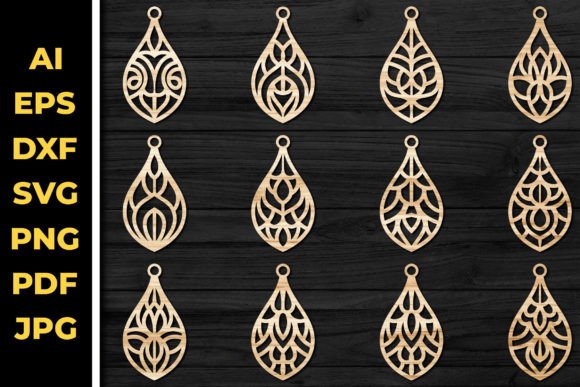
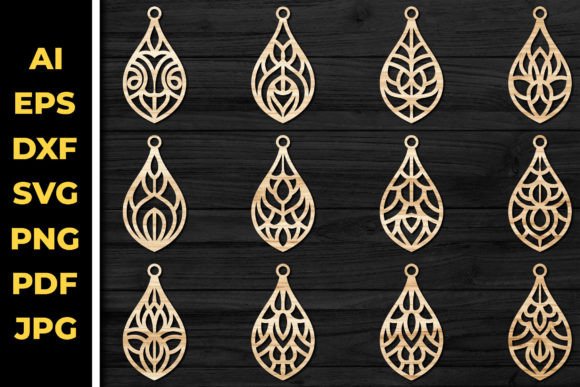
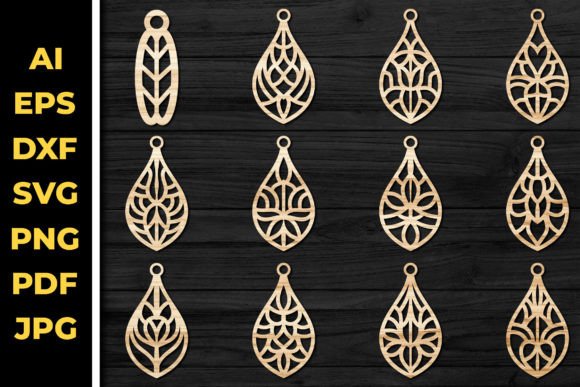
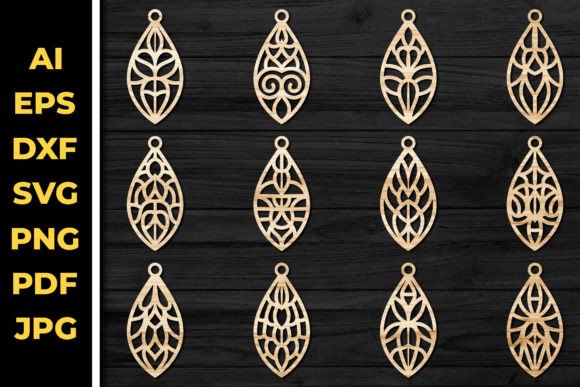
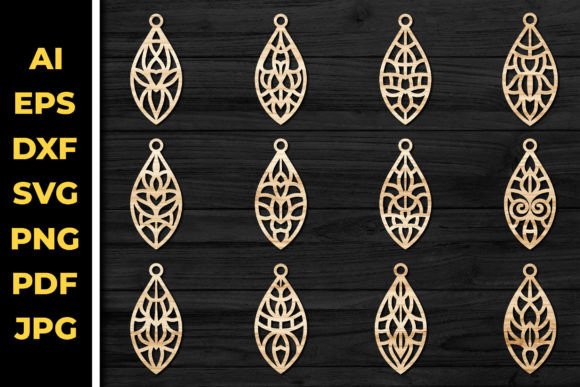
At the forefront of this movement is our stunning Earrings Jewelry Set, a collection that exemplifies the potential of mixed-media craftsmanship. Featuring exquisite designs crafted from a sophisticated blend of Acrylic and Wood, these pieces demonstrate how contrasting textures and materials can elevate a simple accessory into a statement of style. The inclusion of pendant Vector Cut Files within this set allows users to replicate these intricate designs or modify them to suit specific brand aesthetics. Whether you are a hobbyist looking to refine your craft or a small business owner aiming to diversify your inventory, understanding the strategic application of these templates is essential for long-term success.
The Strategic Value of Precision Templates in Modern Craftsmanship
For professionals aged 20–50 who value efficiency and quality, DIY Laser Cut Jewelry Making Templates represent more than a shortcut; they represent a standardization of quality. In traditional jewelry making, consistency is difficult to achieve manually. Hand-cutting wood or acrylic often results in slight variances that can undermine a brand's reputation for precision. Digital templates eliminate this variable. When you load a vector file into software like Lightburn or a Glowforge interface, the machine executes the design with micron-level accuracy every single time.
This consistency is critical for branding. If you are building a business around a specific aesthetic—such as the organic warmth of wood paired with the modern sleekness of acrylic—your customers expect uniformity. Using high-quality templates ensures that every earring in your production run matches the last, reinforcing trust and perceived value. Furthermore, the ability to scale production without a linear increase in labor costs makes these templates a vital tool for operational planning. You can produce a batch of fifty pairs in the time it would take to handcraft two, allowing you to focus on marketing, customer service, and design innovation rather than repetitive manual labor.
Material Synergy: Acrylic and Wood in Design
The versatility of laser cutting technology shines brightest when working with mixed materials. Our featured Earrings Jewelry Set highlights the synergy between Acrylic and Wood. Acrylic offers vibrant color options and a smooth, polished finish, while wood provides texture, grain, and a natural connection to the earth. Strategically combining these materials requires precise kerf compensation—a feature inherent in well-designed vector files. Poorly constructed templates often fail to account for the width of the laser beam, resulting in parts that are too tight or too loose when assembled.
When selecting DIY Laser Cut Jewelry Making Templates, it is imperative to verify that the files include proper nesting and spacing for the specific materials you intend to use. This attention to detail prevents material waste and ensures structural integrity. For instance, a pendant design that relies on interlocking layers must be engineered so that the friction fit holds securely without requiring excessive glue, which could compromise the visual appeal. By choosing templates that have been tested across different densities of wood and thicknesses of acrylic, you mitigate the risk of production failures and reduce the learning curve associated with material testing.
Integrating Templates into Your Creative Workflow
Adopting a template-based workflow requires a shift in mindset from purely artisanal creation to strategic manufacturing. The goal is not to remove creativity but to channel it more effectively. Instead of spending hours drawing basic shapes, you utilize pre-engineered files to jumpstart the design process. This approach allows you to dedicate your mental energy to higher-value tasks such as color selection, packaging design, and market positioning.
To maximize the utility of DIY Laser Cut Jewelry Making Templates, consider the following operational steps:
- Audit Your Equipment Capabilities: Ensure your laser cutter (Glowforge, Lightburn-enabled diode, etc.) or vinyl cutter (Cricut) can handle the intricacy of the vector lines. Some fine details may require a CO2 laser, while others work perfectly on diode systems.
- Test Material Combinations: Before committing to a full production run, create prototypes using the Acrylic and Wood mix. Test how the materials react to heat and how they bond together.
- Customize for Brand Identity: Use the vector files as a base. Modify dimensions, add monograms, or adjust layering to create a unique signature style that distinguishes your products from generic marketplace offerings.
- Optimize File Management: Organize your library of templates by category, size, and material compatibility. Efficient file management reduces downtime and streamlines the transition from idea to execution.
Decision-Making: When to Build vs. When to Buy
A common dilemma for emerging creators is whether to design their own vector files from scratch or purchase professional DIY Laser Cut Jewelry Making Templates. While designing from scratch offers total control, it demands significant expertise in vector software and an understanding of laser physics. For most entrepreneurs, purchasing high-quality templates is the more prudent financial decision. It accelerates time-to-market and ensures a level of technical proficiency that might take months to develop independently.
However, reliance on templates should not lead to stagnation. The strategic use of these files involves continuous iteration. Start with a proven design, such as the intricate patterns found in our Earrings Jewelry Set, and then experiment with variations. Perhaps you change the wood species from birch to walnut, or swap clear acrylic for holographic film. This iterative process allows you to maintain a fresh catalog without reinventing the wheel with every new product launch.
Risks and Considerations in Template Usage
While DIY Laser Cut Jewelry Making Templates offer immense benefits, they are not without risks if used without clear goals or context. One significant pitfall is the "copycat" effect. Because vector files can be shared easily, popular designs can become saturated in the market. If you rely solely on trending templates without adding your own unique value proposition, your brand may struggle to differentiate itself. To avoid this, treat templates as ingredients rather than finished meals. Combine them with unique finishing techniques, custom hardware, or innovative packaging to create a holistic product experience.
Another risk lies in material safety and quality. Not all acrylics and woods are created equal. Cheap acrylic can melt unevenly, releasing toxic fumes, while certain treated woods may not burn cleanly. When using templates intended for specific materials, ensure you are sourcing raw materials that meet safety standards. Additionally, always verify the licensing terms of the vector files. Many templates are sold for personal use only, and selling items made from them commercially may require a specific commercial license. Ignoring these legal nuances can lead to intellectual property disputes that threaten your business operations.
Long-Term Planning and Scalability
For those viewing jewelry making as a serious venture, the integration of DIY Laser Cut Jewelry Making Templates should be part of a broader growth strategy. As demand increases, the ability to rapidly prototype and produce becomes a competitive advantage. Templates allow you to test new designs quickly and gauge market response before investing heavily in tooling or inventory. This agility is crucial in the fast-paced fashion industry where trends shift rapidly.
Furthermore, these templates facilitate collaboration. If you plan to expand your team or outsource production, having standardized digital files ensures that any operator can reproduce your designs with consistent results. This scalability is the key to transitioning from a solo hobbyist to a sustainable business entity. By establishing a robust library of vetted templates, you build an asset that grows in value over time, supporting a diverse product line ranging from earrings to pendants and beyond.
Conclusion: Elevating Your Accessory Game
The journey from concept to creation is significantly shortened and enhanced through the strategic use of DIY Laser Cut Jewelry Making Templates. Our Earrings Jewelry Set serves as a prime example of what is possible when precision engineering meets artistic vision. By combining the durability of wood with the vibrancy of acrylic, and utilizing vector files compatible with industry-standard machines like Glowforge, Lightburn, and Cricut, you unlock a world of creative potential.
Success in this domain does not come from random experimentation but from intentional planning. Understand your materials, respect the technical requirements of your equipment, and view templates as tools for empowerment rather than shortcuts. With the right approach, you can craft one-of-a-kind pieces that turn heads, build a loyal customer base, and establish a brand known for quality and innovation. Unlock your creativity today and transform your vision into reality with versatile, high-performance jewelry cut files designed for the modern maker.