Clock with Animals Pattern, Laser Cut: A Practical Guide to Design and Execution
The intersection of functional timekeeping and decorative art has long been a staple in home decor, but the advent of accessible digital fabrication has shifted how these items are created. A Clock with Animals Pattern, Laser Cut represents a specific niche within this broader category, offering a distinct aesthetic that combines organic motifs with precise geometric assembly. For makers, small business owners, and DIY enthusiasts, understanding the nuances of this design style is essential for producing high-quality results. This article explores the characteristics, material considerations, and practical applications of this design approach, helping you evaluate whether it fits your specific project goals.
Defining the Design Philosophy
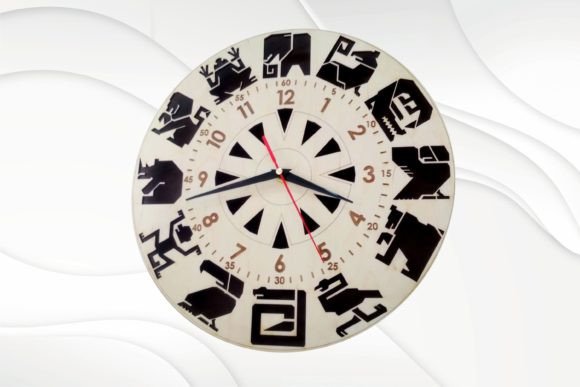
A Clock with Animals Pattern, Laser Cut is not merely a timepiece; it is a layered composition where functionality meets intricate visual storytelling. Unlike traditional clock faces that rely on printed dials or simple numerals, this design utilizes negative space and overlapping layers to create depth. The "animals pattern" aspect typically involves silhouettes or stylized representations of fauna arranged in a totem-like structure or scattered across the face to form a cohesive narrative.
What distinguishes this approach from standard laser-cut clocks is the complexity of the interlocking parts. These designs often function as puzzles or kinetic sculptures, where the movement of the hands interacts with the static animal figures. The precision required for such a design relies heavily on the capabilities of modern cutting tools like Glowforge or CO2 lasers. The resulting product is a unique item that can be customized in terms of material, color, and scale, making it a versatile option for both personal gifts and commercial inventory.
Material Selection and Structural Integrity
One of the most critical decision factors when working with a Clock with Animals Pattern, Laser Cut is the choice of substrate. While the design files are universal, the physical outcome varies significantly based on the material used. The most common recommendation for this specific type of intricate design is 3mm plywood. This thickness offers an optimal balance between structural rigidity and the ability to cut fine details without burning through the material excessively.
- Plywood: Provides a natural, warm aesthetic. It is durable enough to support the weight of moving clock mechanisms and holds paint well. However, the grain direction can affect the finish, requiring careful orientation during the cutting process.
- Cardboard: An excellent alternative for prototyping or creating lightweight, temporary displays. It is cost-effective and allows for rapid iteration of the design. However, it lacks the longevity and premium feel of wood, making it less suitable for heirloom-quality gifts.
- Acrylic or MDF: These materials offer different visual properties. Acrylic provides a glossy, modern look but requires specific laser settings to prevent melting edges. MDF offers a smooth surface for painting but may produce more dust during cutting.
When evaluating these options, consider the intended use. If the clock is destined for a child's room or a high-traffic area, the durability of 3mm plywood is superior. For a one-off artistic statement or a budget-friendly prototype, cardboard may suffice. The design files typically accommodate these variations, but the kerf (the width of the material removed by the laser) must be accounted for in the software settings to ensure the pieces fit together tightly.
Comparing Digital Formats and Workflow Efficiency
The versatility of a Clock with Animals Pattern, Laser Cut project hinges on the availability of compatible vector files. Most professional-grade designs come in multiple formats, including SVG, DXF, PDF, CDR, AI CS5, and EPS. Each format serves a different stage of the workflow and compatibility with various software ecosystems.
SVG (Scalable Vector Graphics) is widely regarded as the industry standard for web-based design and many consumer-grade laser cutters. It is lightweight and scales infinitely without losing quality. DXF (Drawing Exchange Format) is often preferred for industrial machinery and CAD software, ensuring precise coordinate mapping for complex cuts. Meanwhile, formats like AI (Adobe Illustrator) and CDR (CorelDRAW) are essential for designers who need to edit the artwork before sending it to the cutter, allowing for adjustments to line weights, node placement, or layer organization.
When comparing these resources, the tradeoff often lies between ease of use and editability. A user with a Glowforge machine might find the SVG file immediately usable, whereas a professional using a large-format CO2 laser integrated with CAD systems will likely require the DXF or AI versions. It is crucial to verify which file type aligns with your specific hardware and software stack before purchasing or downloading the template. Using the wrong format can lead to scaling errors, misaligned cuts, or the inability to open the file entirely.
Evaluation of Scale and Dimensional Constraints
Dimensional accuracy is paramount when manufacturing a Clock with Animals Pattern, Laser Cut. The reference dimensions for a standard version of this design often cite a largest part size of 310x310 mm (approximately 12.2x12.2 inches). This size is significant because it dictates the minimum bed size required for your laser cutter. If your machine has a smaller work area, you will need to scale the design down, which introduces potential complications.
Scaling down a design that features intricate animal patterns can result in lost detail. Fine lines may become too thin to cut cleanly, and small moving parts might jam. Conversely, scaling up beyond the original 310mm limit requires ensuring that the material sheet is large enough to accommodate the entire layout without nesting issues. Additionally, the thickness of the material plays a role here; a 3mm thick board at 310mm square is manageable for most hobbyist machines, but larger dimensions may require specialized handling to prevent warping during the engraving or cutting phase.
For those planning to sell these items, consistency in sizing is key. Customers expect a clock to fit standard wall spaces. Therefore, sticking to the original 12.2-inch footprint ensures compatibility with existing shelf spaces and wall mounts. Deviating from these dimensions should be done with caution, testing the structural integrity of the scaled version before committing to production runs.
Strengths and Limitations of the Approach
The primary strength of the Clock with Animals Pattern, Laser Cut is its customizability. By providing digital cut drawings in multiple formats, creators have the freedom to experiment with colors, finishes, and even slight modifications to the animal motifs. Painting the finished product allows for exclusive, personalized gifts that mass-produced alternatives cannot match. The tactile nature of the layered wood adds a sensory dimension that flat prints lack.
However, there are limitations. The reliance on digital files means that the final quality is directly tied to the operator's skill in setting up the laser parameters. Incorrect power or speed settings can lead to charring, incomplete cuts, or warped layers. Furthermore, while the design is robust, it is still a mechanical assembly; if the clock mechanism is not installed correctly, the delicate animal layers may interfere with the movement of the hands. This makes the learning curve slightly steeper than assembling a pre-made kit.
Determining the Best Fit for Your Project
Is a Clock with Animals Pattern, Laser Cut the right choice for your needs? If you are looking for a product that bridges the gap between craft and engineering, offering a high degree of customization and a unique selling point for a store, then this design is an excellent fit. It appeals to adults aged 20–50 who value handmade aesthetics and are willing to invest time in the creation process.
On the other hand, if your goal is rapid, low-cost mass production with minimal post-processing, simpler, single-layer designs might be more efficient. The multi-layered nature of the animal totem pattern requires assembly time and potentially finishing work like sanding and painting. Additionally, if your laser equipment is outdated or lacks the precision to handle 3mm material cleanly, you may encounter frustration with this specific design.
In conclusion, the Clock with Animals Pattern, Laser Cut offers a compelling blend of artistry and utility. By carefully selecting materials, understanding file formats, and respecting dimensional constraints, creators can produce stunning, functional art. Whether for a personal gift or a boutique inventory, the success of the project depends on a balanced approach to design execution and resource management. Evaluating these factors beforehand ensures that the final product meets both aesthetic expectations and functional requirements.